A Vision for Civilisation
Society redefined — not by possessions, but by wisdom
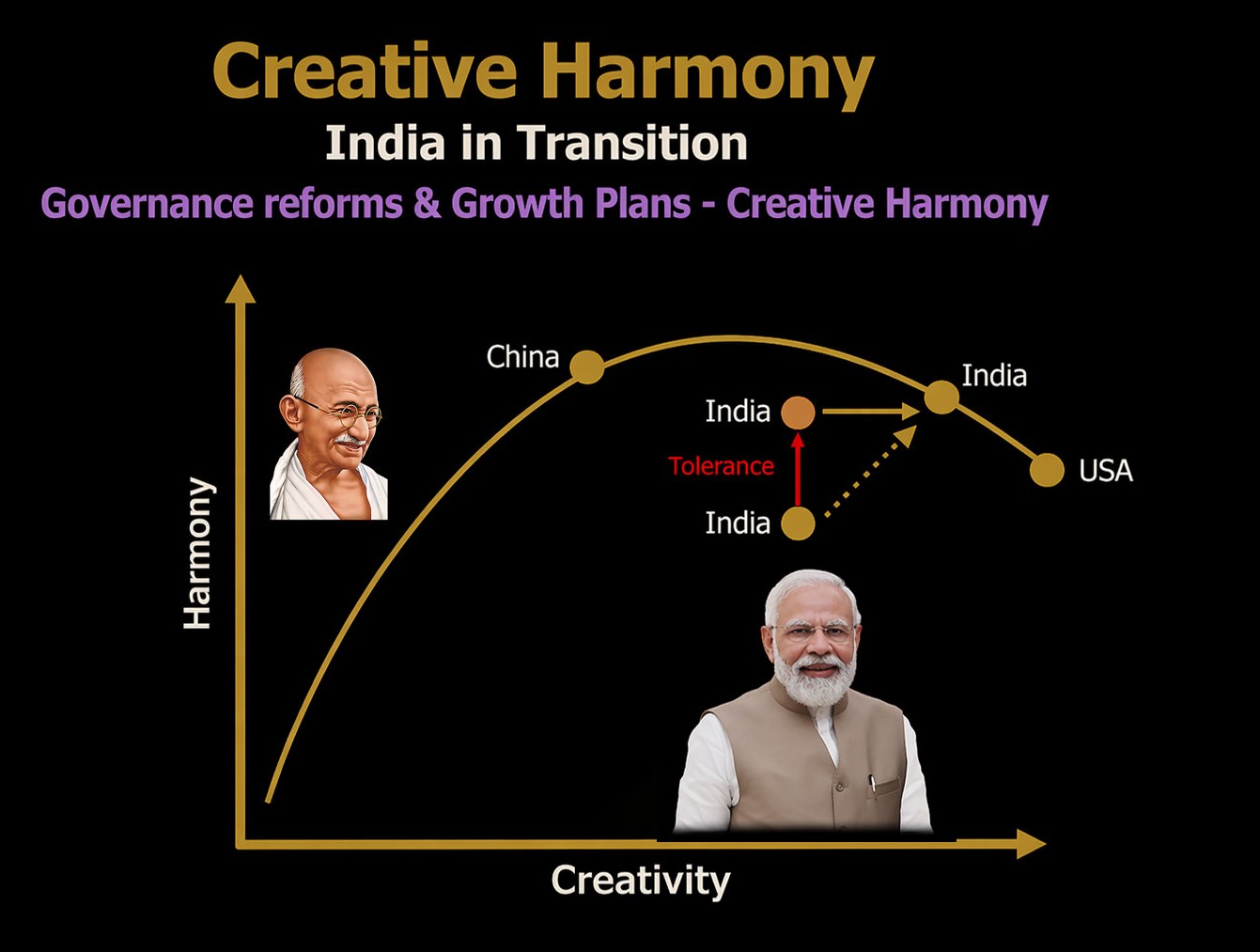
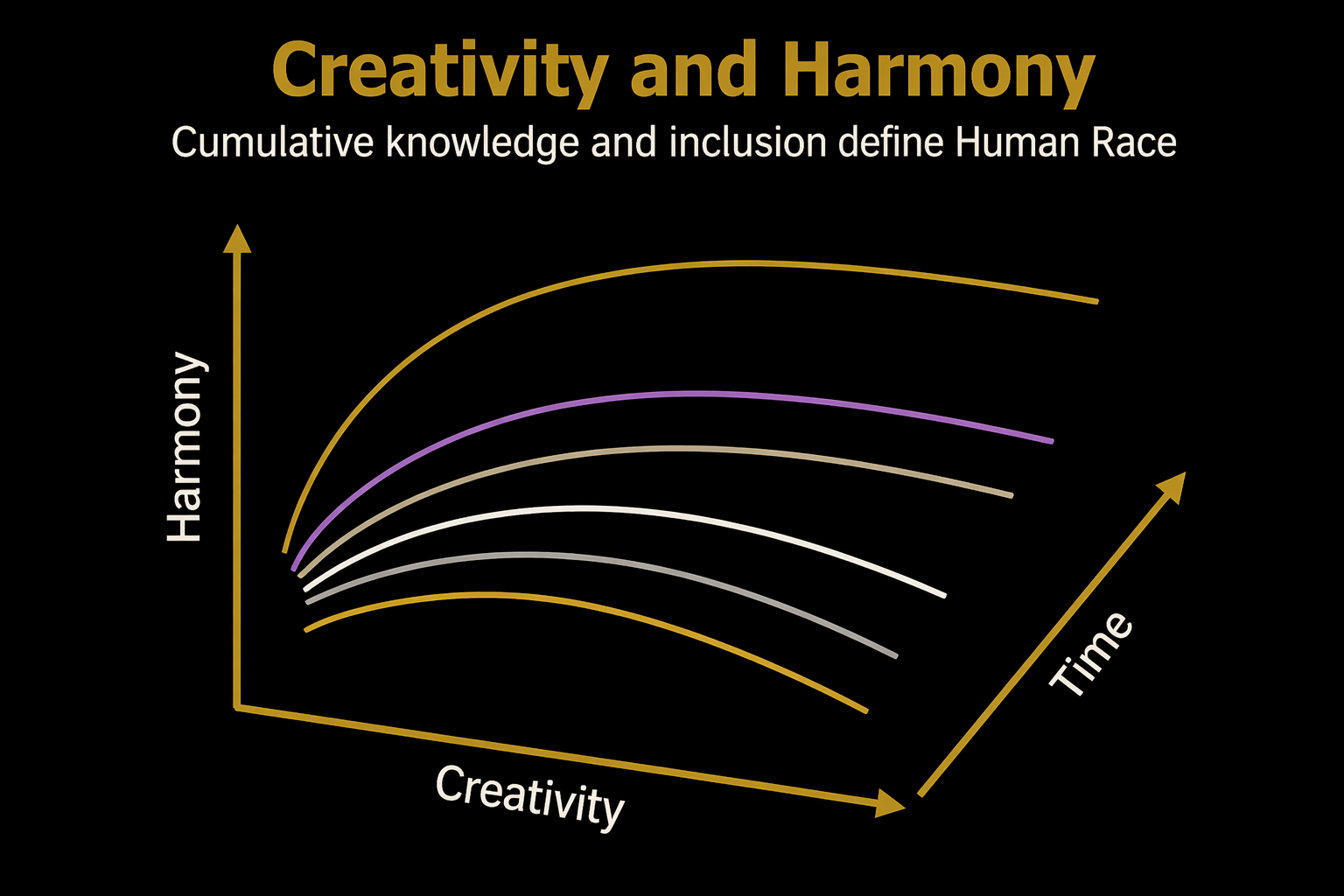
Where Creativity is a function of cumulative human knowledge, and Harmony is the deepest extension of inclusion — together they define a society measured not by what it owns, but by what it becomes.
Across millennia, humanity has been defined by the dominant assets of its age. Creative Harmony charts where we have been — and where we are destined to arrive.
Society was shaped by what could be held, harvested, and defended. Wealth meant land. Power meant control of physical resources.
Foundational KnowledgeMachines multiplied human capacity. The intangible — knowledge itself — began to rival land as the true source of power and progress.
Applied KnowledgeInformation becomes infinite. The rarest resource shifts from data to meaning — to the human capacity for creativity, empathy, and wisdom.
Wisdom in ProgressThe self-actualised creative individual in a harmonious society. Not what is owned, but what is created and what harmony is embodied.
Creative Harmony"Creativity is a function of cumulative knowledge — Harmony is an extension of inclusion. Society is defined by creativity and harmony, instead of the prior conceptions of either tangibles and intangibles, or rights and responsibilities."
Creativity is not a talent reserved for the gifted — it is the natural output of cumulative knowledge, thoughtfully absorbed and freely expressed. When education replaces rote learning with genuine inquiry, every individual becomes a creative force. Creativity is democratic. It is the civilisational dividend of wisdom well-distributed.
Harmony is inclusion — made deep, made structural, made real. It is the recognition that no individual flourishes in isolation, and no society endures in division. Harmony is the symbiotic relationship between individuals, communities, and the natural world — the governing principle for a civilisation that chooses cooperation over conflict, abundance over scarcity.
Creative Harmony did not emerge from a think tank or a university department. It was forged across a lifetime — on Wall Street, in village schools, on farm soil, and through the hard lessons of governance reform. Meet its architect.
Discover the Man
The Architect of Creative Harmony
Chief Investment Strategist · Author · Visionary
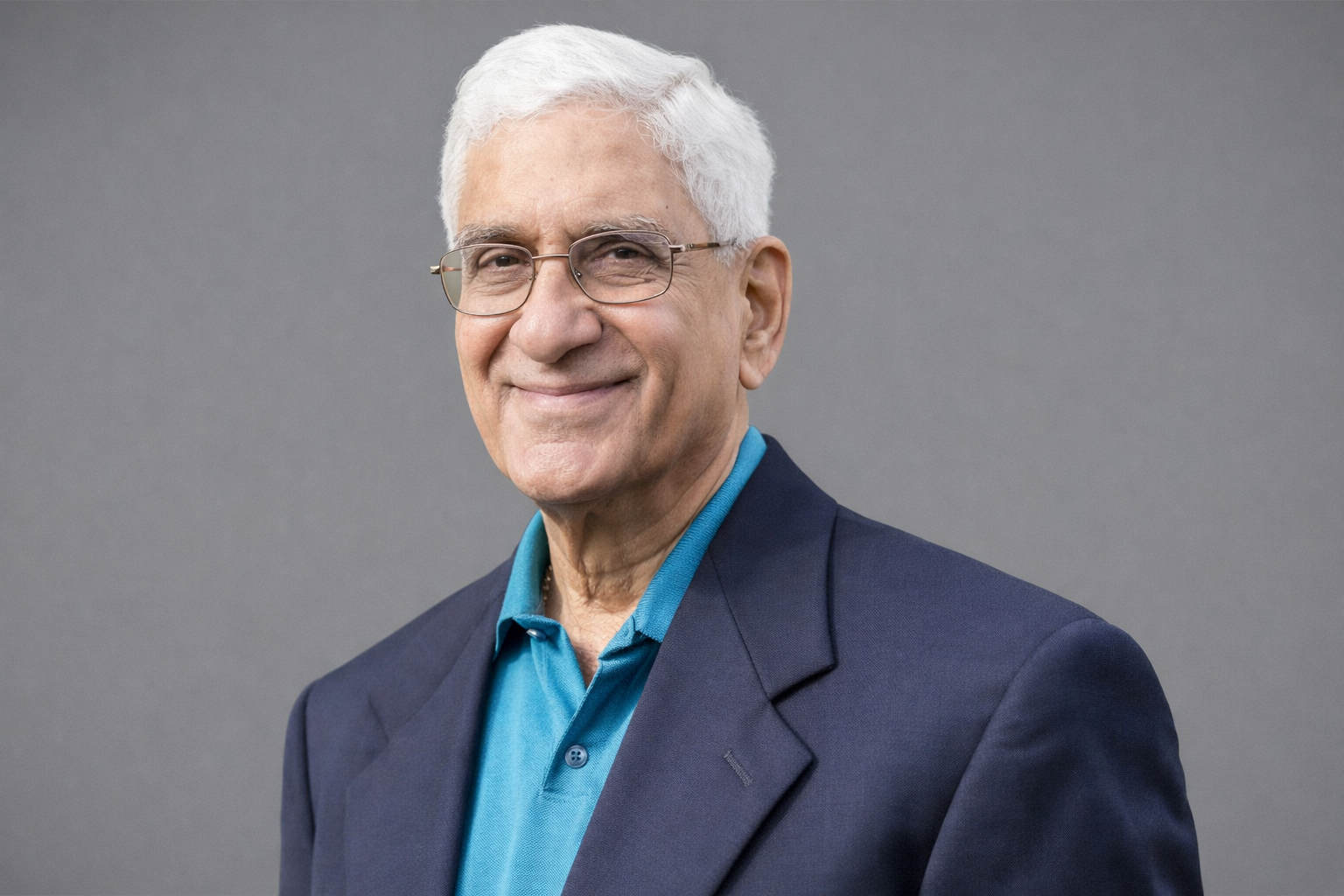
Rao Chalasani arrived in the United States in 1968 with a hunger to understand the world and the discipline to reshape it. Over 25 years on Wall Street — rising to Chief Investment Strategist of a major firm — he mastered the language of capital. But always, his true compass pointed elsewhere.
In 2000, he retired from professional life to give equal time to what the world had neglected. His singular logic: failure is a steppingstone for others, never wasted effort. This philosophy — refined across decades of action — became Creative Harmony.
Partnered with FDR in Hyderabad from 2000 to 2006, working on foundational governance reforms — redesigning systems to be transparent, accountable, and genuinely responsive to citizens. A deliberate choice to work on problems of high difficulty and profound necessity.
As principal architect of NSF India's Creative Learning & Leadership Initiatives since 2017, Rao is replacing rote memorisation with curiosity and critical thinking — currently serving over two lakh students in public schools, entirely free of cost. The curriculum is his philosophy made real.
A high-priority endeavour in Andhra Pradesh — developing factory-standard, high-quality organic fertilisers and pesticides designed to match or exceed conventional farm output. Sustainability and circular economy not as idealism, but as practical engineering.
Produced 125 television episodes across major Hindi and Telugu channels — Purab Ya Paschim and Toorpu Padamara — using the power of entertainment to promote positive attitude and individual responsibility at unprecedented scale.
Four books forming a complete intellectual framework — a new economics, a new governance, and a new civilisational compass for the digital age.
A foundational diagnosis of systemic economic biases and a rigorous blueprint for equitable alternatives suited to the digital epoch.
How effective, transparent governance structures can revitalise democratic institutions and restore authentic civic participation.
The synthesis. Individual contribution, cultural underpinnings, and the symbiotic relationship between humans, society, and nature — for the digital age.
Grounding theory in real-world implementation across governance reform, creative education, organic farming, and social innovation in India and beyond.
"Failure is a steppingstone for others —
not a wasted effort."
— Rao Chalasani
Choose work by the depth of human need, not by the likelihood of quick success. The hardest problems are the most necessary.
The individual, society, and nature exist in symbiotic balance. Creativity without harmony is noise. Harmony without creativity is stagnation.
Every setback lays the groundwork for those who follow. Nothing truly devoted to human flourishing is ever wasted.
Twenty-five years building wealth on Wall Street. Twenty-five years — and counting — building a better world.
From the floors of Wall Street to the classrooms of Andhra Pradesh, from governance chambers in Hyderabad to organic farms redefining sustainable agriculture — Rao Chalasani's impact is not theoretical. It is present, measurable, and growing.